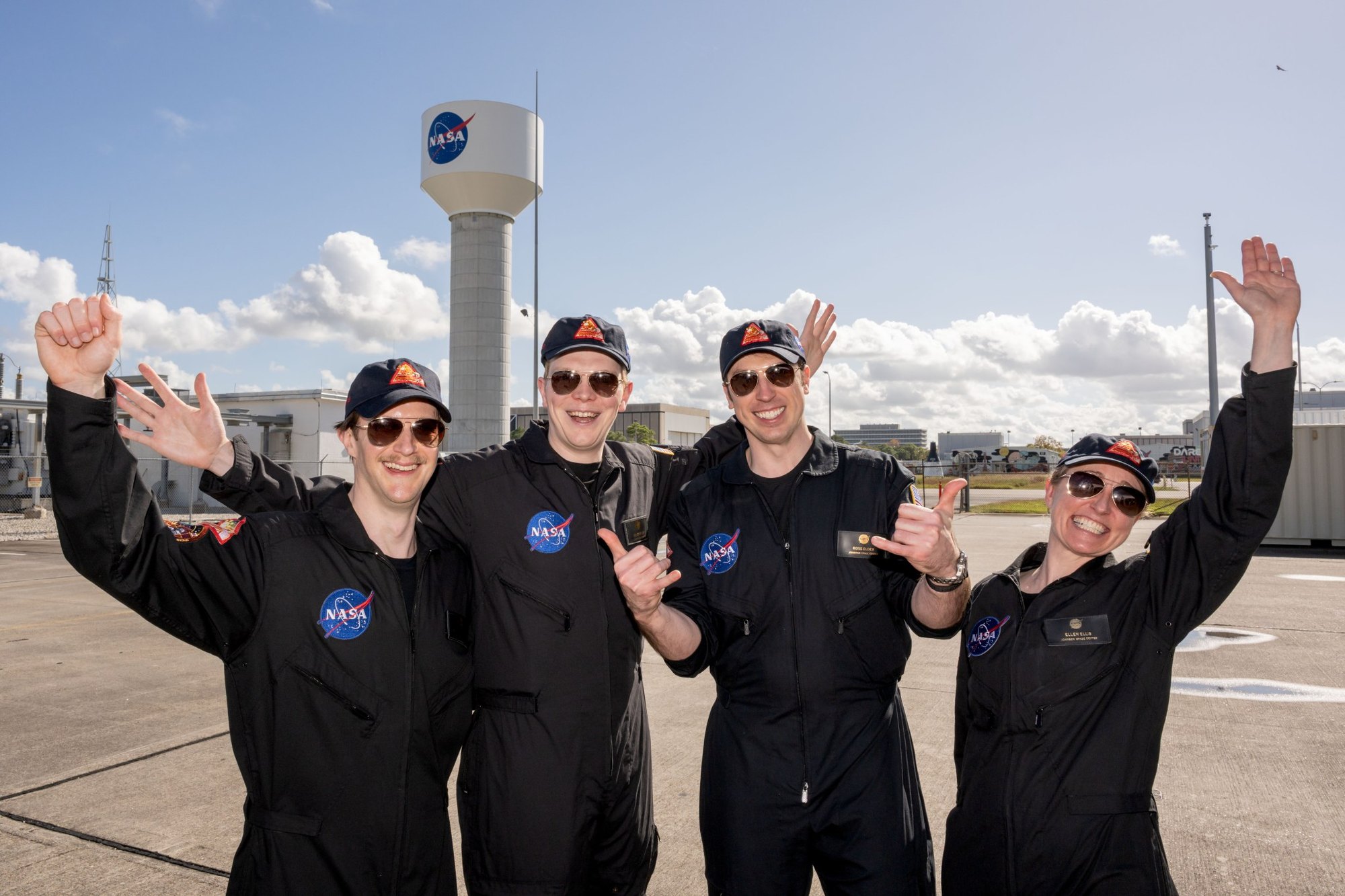
Four research volunteers stepped out of NASA's Mars Dune Alpha habitat at Johnson Space Center on Oct. 31 after 378 days in isolation. They had gone without windows, outdoor sounds or real-time contact with family.
The exit completed the second yearlong Mars surface simulation under NASA's Crew Health and Performance Exploration Analog, or CHAPEA, program. Ross Elder, Ellen Ellis, James Spicer and Matthew Montgomery served as the crew. They entered the roughly 1,700-square-foot, 3D-printed habitat on Oct. 19, 2025, NASA said in a Nov. 9 article detailing the crew's post-mission reflections.
Johnson Space Center Director Vanessa Wyche said the crew's work goes beyond completing a single mission. "It is about preparing for the challenges of human exploration beyond Earth … and paving the way for future missions to the Moon and, one day, Mars," Wyche said, according to NASA.
Inside the habitat, the crew conducted simulated Marswalks, robotic operations, habitat maintenance, exercise and crop cultivation. They collected health and performance data while navigating limited resources and communication delays. NASA's reflections article described delays of up to 22 minutes each way. Houston Public Media, quoting Wyche at the Oct. 31 exit ceremony, reported delays between 26 and 44 minutes.
NASA astronaut Jack Hathaway put the isolation in perspective. While the CHAPEA crew was sealed inside, he completed a 237-day mission aboard the International Space Station and returned to Earth.
"The reality of what you guys did here required immense physiological and psychological strength, teamwork, and human grit," Hathaway said, according to NASA.
Life inside 1,700 square feet
Elder, a U.S. Air Force experimental test pilot, found simulated Marswalks and robotic exploration "uncannily similar" to operating as part of a flight. Crew members remotely operated a drone and a rover to survey terrain and identify or collect rock samples.
Spicer compared the year to living aboard a submarine or boat, where limited supplies shaped daily decisions. The crew tracked consumables from dish soap to respirator filters.
Ellis, a U.S. Space Force officer, served as medical officer and helped organize biological sample collections. She said bonds with her crewmates kept isolation at bay. "It would be difficult to convince someone who has never lived in isolation that most days, I don't feel isolated," Ellis said, according to NASA.
Montgomery brought experience in hardware engineering, robotics and indoor agriculture. He ran a seed-germination experiment using a control and simulated Martian soil. At the crew's exit, he was described as the "Swiss Army knife of crewmates."
"It's really the people that make exploration possible," Montgomery said, according to NASA.
What the data means
Two weeks of post-mission evaluations and debriefs will help researchers interpret the crew's data. The study builds on the first CHAPEA mission, which concluded July 6, 2024.
Grace Douglas, CHAPEA's principal investigator, said the research will help NASA weigh human health and performance risks against resources. Those include crew time, communication capacity, and food and water system designs.
Sara Whiting, CHAPEA project scientist, said the data arrives as NASA plans a lunar outpost near the Moon's South Pole. "This is really the now moment for this kind of data," Whiting said.
NASA plans to transition CHAPEA into a Moon and Mars Exploration Analog, or MMEA, Houston Public Media reported. The agency estimates MMEA could begin as soon as August 2027, with crew members again inside Johnson Space Center for a year. NASA is accepting applications for the next mission.