NASA's Johnson Space Center reached its 65th anniversary on Nov. 1.
The center traces its origin to May 25, 1961, when President John F. Kennedy addressed a joint session of Congress. He committed the nation to landing a man on the moon before the decade's end, according to a NASA retrospective published by authors John Uri and Sumer Loggins. NASA's Space Task Group, already running Project Mercury out of Langley Research Center in Hampton, Virginia, needed more room.
On Sept. 19, 1961, the agency picked a site near Houston for its new Manned Spacecraft Center. NASA established the center on Nov. 1, 1961.
Construction began in 1962. While crews built the Clear Lake campus, employees worked in 13 leased buildings in southeast Houston. The first workers moved onto the new site in late 1963.
The center was renamed the Lyndon B. Johnson Space Center in 1973, honoring the former president's support of the space program.
Robert Gilruth, the center's first director, moved into his top-floor office in the Project Management Building on March 5, 1964. Mission Control followed. Building 30, housing what is now the Christopher C. Kraft Jr. Mission Control Center, finished construction in November 1964. Houston took full control of a crewed mission for the first time with Gemini IV in June 1965. It has directed every NASA human spaceflight since, according to the NASA retrospective.
The campus kept growing to match new programs. The Neutral Buoyancy Laboratory in the Sonny Carter Training Center opened in 1997 for shuttle and space station spacewalk training. Building 9, now called the Space Vehicle Mockup Facility, houses Orion spacecraft training mockups, commercial mockups and the Active Response Gravity Offload System (ARGOS).
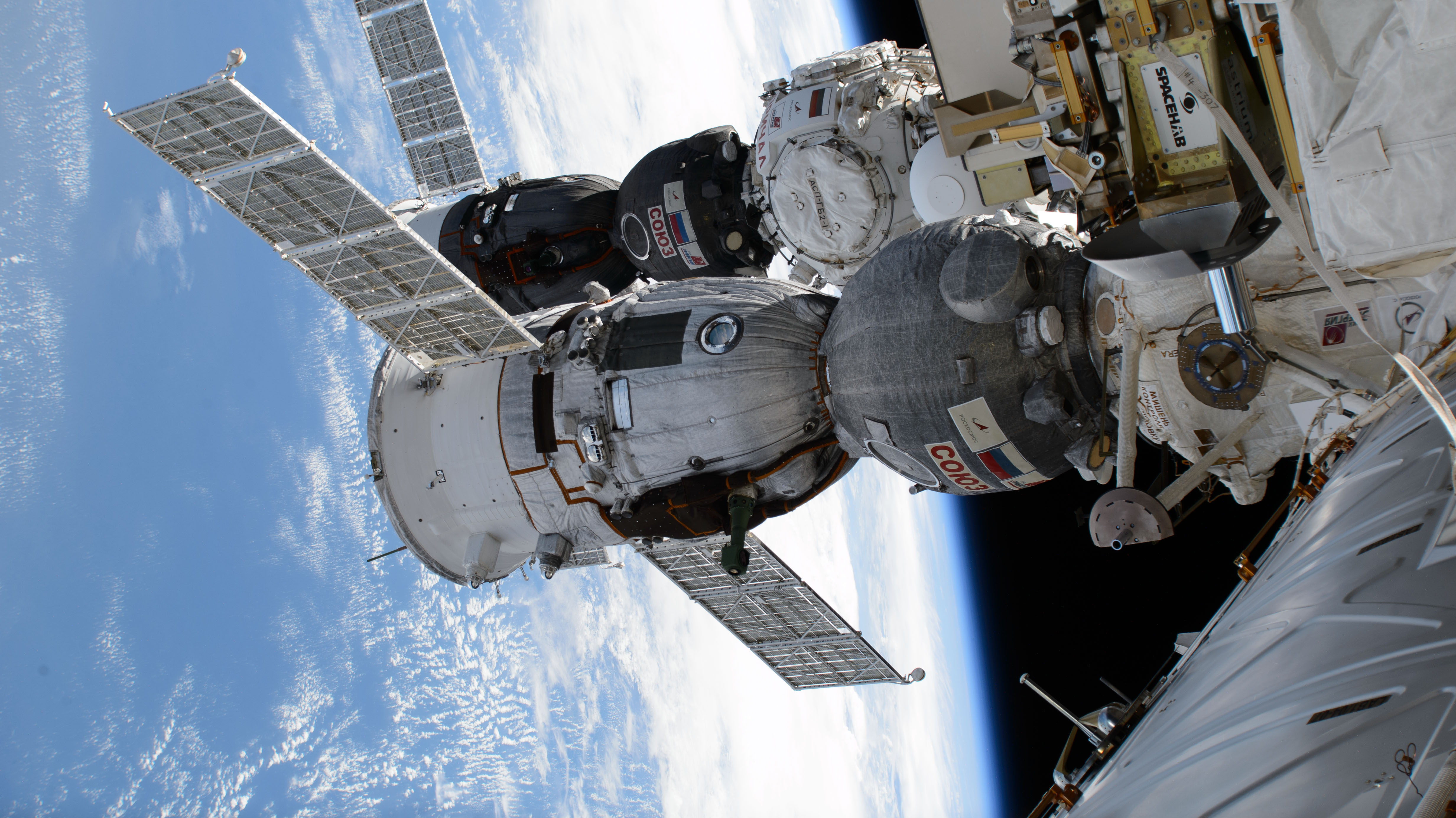
JSC serves as NASA's Center of Excellence for Human Spaceflight. It is home to the astronaut corps, the Low Earth Orbit Program covering International Space Station (ISS) operations, the Moon Base Program, the Orion Program and the Human Health and Performance Directorate.
A new park on historic ground
One of the campus's newest landmarks sits on one of its oldest footprints. The Lunar Receiving Park, dedicated March 25, opened on the site of the former Lunar Receiving Laboratory, or Building 37. Apollo 11, 12 and 14 astronauts completed 21-day quarantine periods there after returning from the moon, collectSPACE reported.
Built between 1966 and 1969, the 83,000-square-foot lab housed vacuum and sample laboratories and a crew reception area. After the Apollo program ended, the building served NASA's Life Sciences division until 2017. NASA razed Building 37 in August 2024.
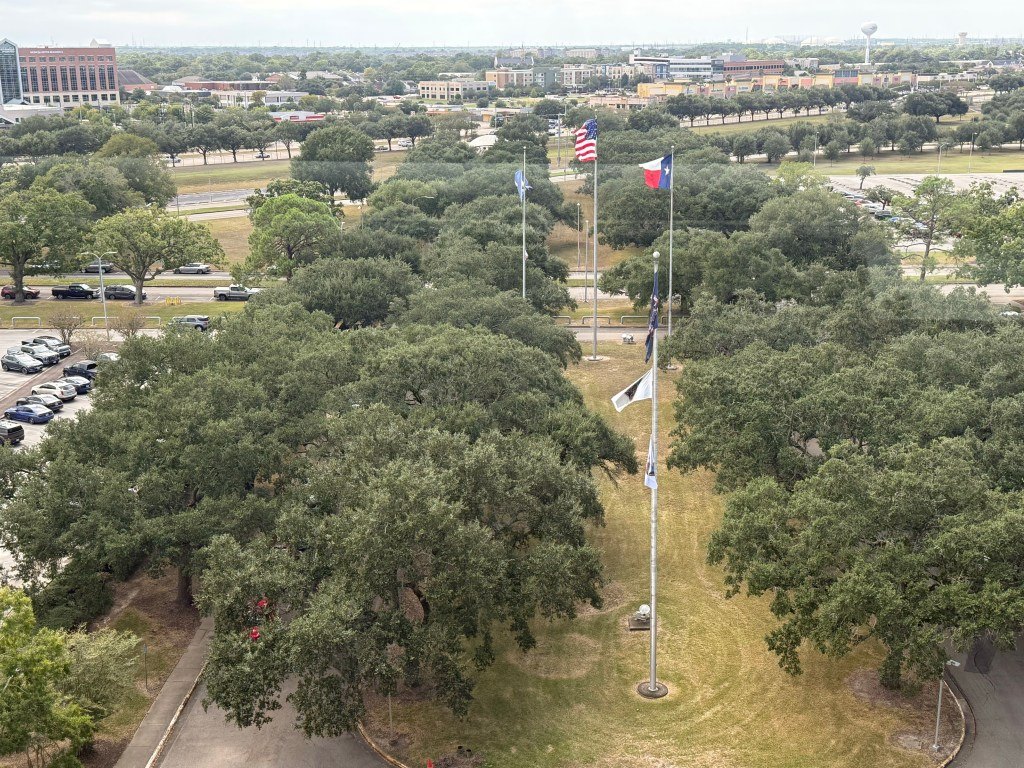
The park preserves artifacts from the original structure, including the large metal doors that led into the high bay where Apollo command modules were held. Flower beds laid out in a grid represent the division between the astronauts' living quarters. Interpretive signs line an elevated walkway.
In July, the Artemis II crew visited the park for the dedication of a second-generation Apollo 14 Moon tree. The loblolly pine descends from seeds that NASA astronaut Stuart Roosa carried aboard Apollo 14, according to NASA's Johnson Space Center on X.
The park sits on federal property and is not open to the public. JSC Director Vanessa Wyche is scheduled to deliver remarks at an employee anniversary celebration at the park on Nov. 19, according to a NASA events page. The event runs 5:30 to 8:30 p.m. and is limited to badged JSC employees and their families and friends.