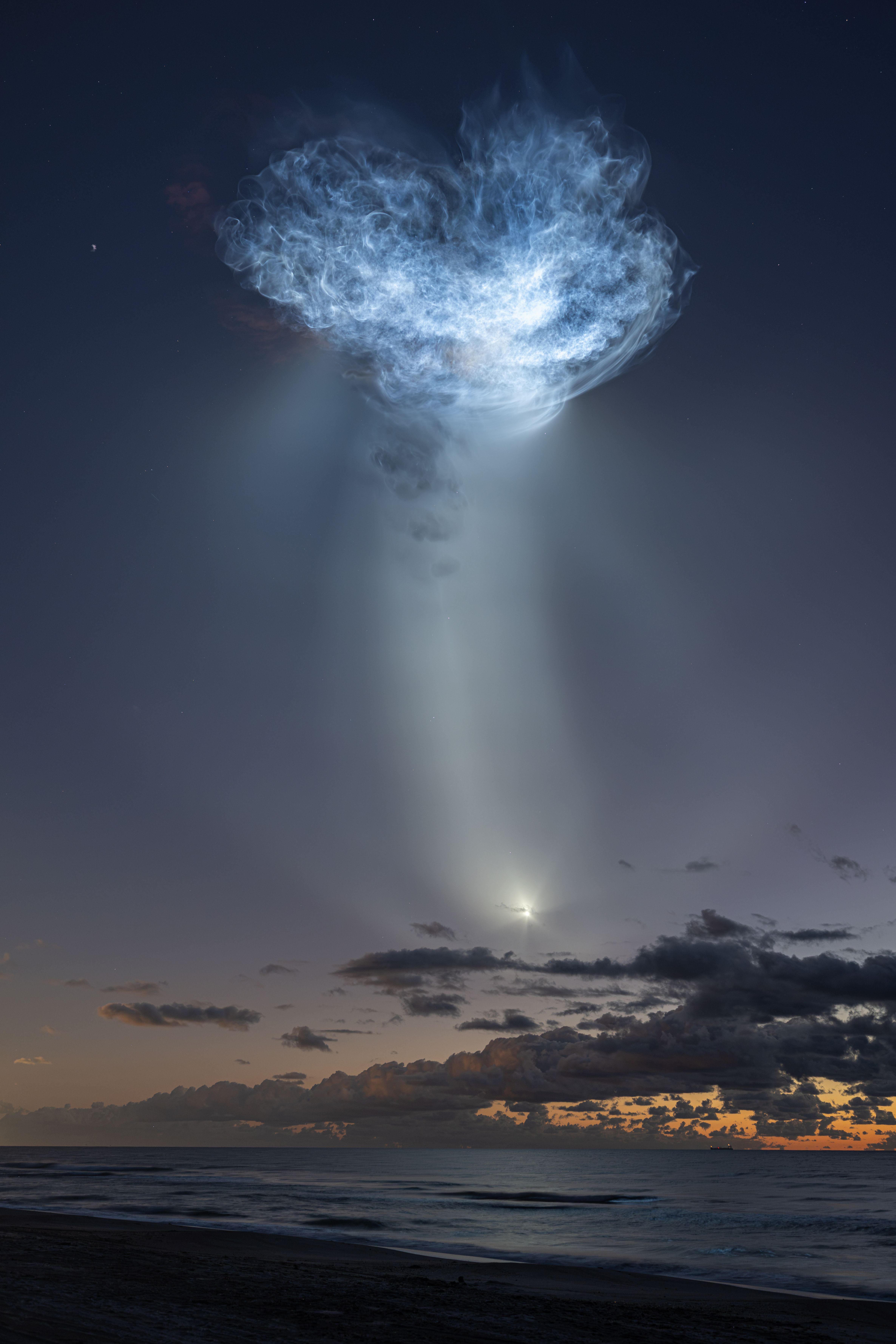
A SpaceX Falcon 9 rocket launched Oct. 13 from Cape Canaveral left behind more than cargo bound for the International Space Station. It left a glowing, jellyfish-shaped exhaust plume visible across the eastern United States.
The mission, SpaceX's 35th commercial resupply flight for NASA, was managed through Johnson Space Center in Houston. NASA released photos of the plume, credited to NASA/John Kraus, showing the rocket's exhaust catching sunlight shortly after the 6:33 a.m. EDT liftoff. The result: a bright, billowing shape resembling a translucent jellyfish hanging in the predawn sky.
The effect occurs near sunrise or sunset, NASA explained, when a rocket's exhaust plume becomes illuminated by the sun's rays while the sky behind it remains dark. NASA describes the visual phenomenon as a "jellyfish."
CW39 Houston first reported on the photos Oct. 16.
What the mission carried
The Falcon 9 carried more than 6,300 pounds of supplies and hardware, along with scientific experiments, to the space station, according to a NASA news release issued through Johnson Space Center.
Among the cargo: hardware to manufacture artificial retinas in microgravity that could help restore vision for patients on Earth, 3D heart tissue models for drug testing, materials to study how a new type of glass forms in space, and brain organoids aimed at uncovering treatment targets for diseases such as Alzheimer's and Parkinson's.
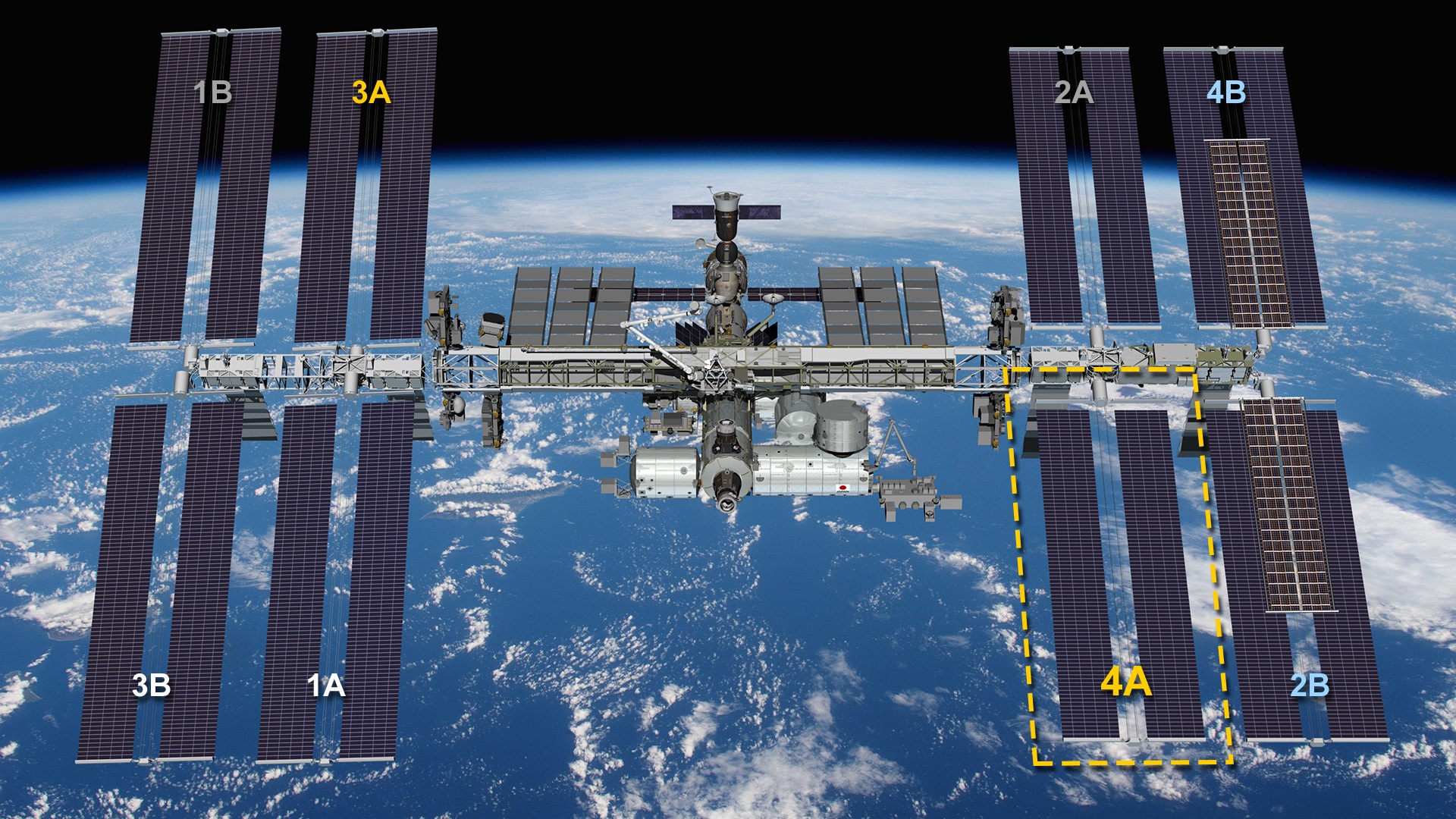
The Dragon spacecraft also delivered the final pair of Roll-Out Solar Arrays for the station. Astronauts plan to install them during spacewalks later this fall, completing a power system upgrade for research, operations and the station's eventual controlled deorbit.
The booster came back. SpaceX posted on X that the Falcon 9's first-stage booster returned to Earth and landed at Landing Zone 40.
Docking and return
The Dragon spacecraft docked at the station's Harmony module on Oct. 15. NASA said the spacecraft is scheduled to remain until mid-November, when it will return to Earth with research and cargo, splashing down off the coast of California.
Upcoming
NASA is scheduled to hold a briefing Oct. 20 on the station's upcoming 100th and 101st spacewalks at Johnson Space Center.