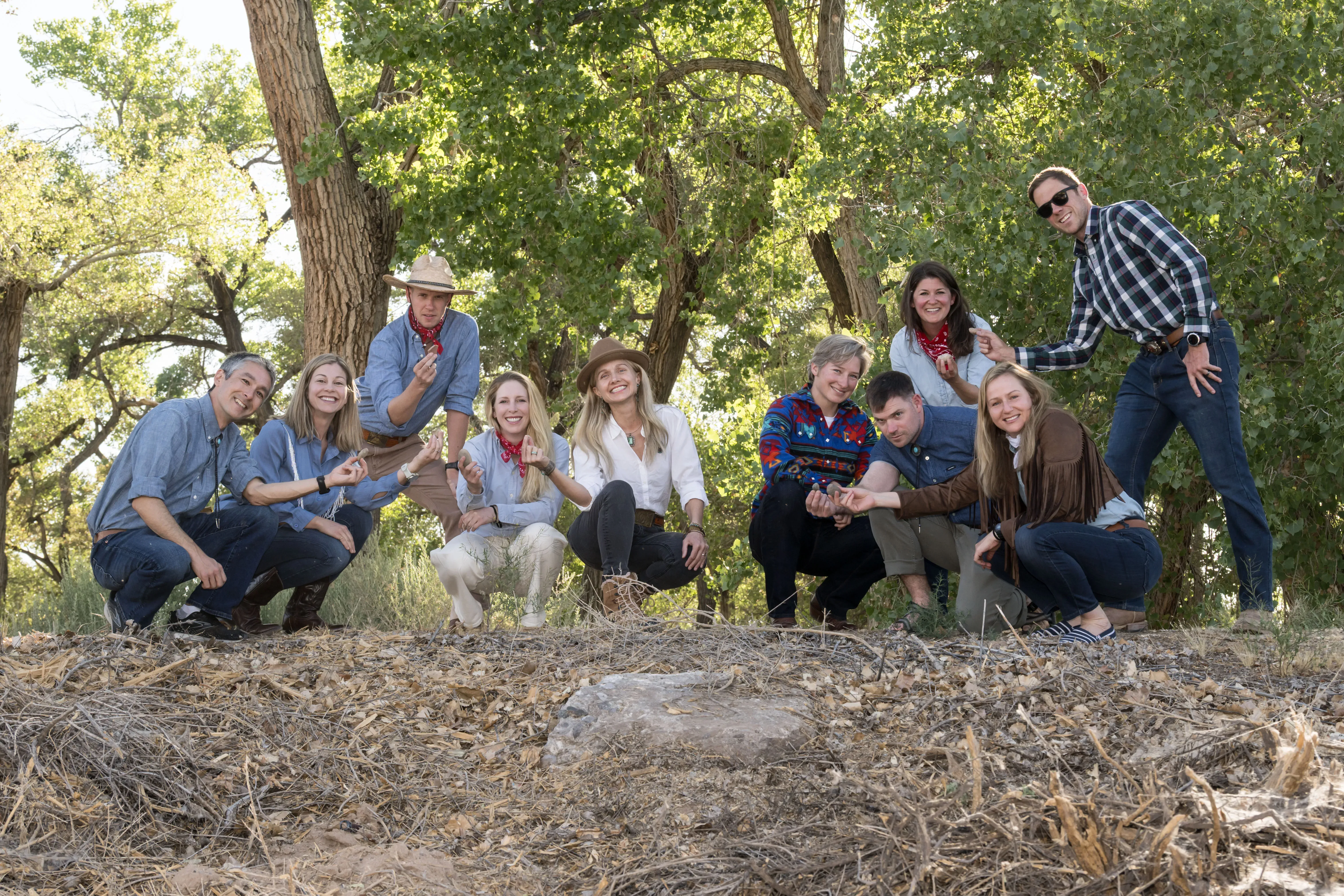
Ten astronaut candidates at Johnson Space Center are halfway through a two-year training program. Their summer included supersonic jet flights, geology fieldwork in Iceland and water survival drills.
NASA's 2025 Astronaut Candidate Class, the agency's 24th and its first new class since 2021, spent the summer logging geology fieldwork, high-altitude flights and water survival exercises at JSC and beyond, NASA said in a training update published Sept. 14. The 10 candidates are on track to graduate in 2027 and join the active astronaut corps for missions to low Earth orbit, the Moon and Mars.
The class of five men and five women was selected from more than 8,000 applicants and introduced at a JSC ceremony on Sept. 22, 2025. Among them is Anna Menon, a Houston native who previously worked in JSC's Mission Control Center supporting medical systems aboard the International Space Station. Menon flew to space in 2024 as a mission specialist on SpaceX's Polaris Dawn.
The summer schedule pushed candidates well beyond the classroom. In May, the group completed geology coursework at Johnson before traveling to the Rio Grande del Norte National Monument in New Mexico for field training. In July, several candidates joined NASA astronauts and Artemis mission support teams in Iceland, where they practiced geologic observations, rock sampling, navigation and teamwork that will translate to lunar surface missions.
Flight training ramped up alongside the fieldwork.
Candidates Adam Fuhrmann and Rebecca Lawler completed training flights in NASA's WB-57 high-altitude research aircraft July 15–16, NASA's Johnson Space Center said on X. The WB-57s, a trio of long-range planes that have flown research missions since the 1960s, train crew to work in tight quarters while wearing a pressure suit. The class also began flying NASA's T-38 supersonic jets and completed altitude chamber runs at Johnson, where facilities simulate pressure levels from sea level to near vacuum.
Lawler, a former U.S. Navy lieutenant commander and experimental test pilot, brought more than 2,800 flight hours across 45-plus aircraft to the program. She previously flew as a NOAA hurricane hunter and during NASA's Operation IceBridge.
Back at JSC, candidates conducted water survival exercises in the Neutral Buoyancy Laboratory (NBL), simulating post-mission landings in remote environments. They are also completing intensive Russian language classes, cross-cultural training, spacewalk drills at the NBL and learning spacecraft maintenance and repair procedures.
In June, candidate Ben Bailey joined NASA astronaut Tracy Dyson and astronauts from the European Space Agency and Japan's JAXA for CAVES, a four-day expedition run by ESA focused on teamwork and decision-making, NASA's Johnson Space Center said on X.
Lauren Edgar, another member of the class, served as deputy principal investigator for the Artemis III Geology Team and spent more than 17 years supporting Mars exploration rovers before her selection.
When the class was introduced in September 2025, JSC Director Vanessa Wyche called them representatives of "America's best and brightest" who would help "usher in the Golden Age of innovation and exploration as we push toward the Moon and Mars."
The 10 candidates will graduate in 2027 and could be assigned to research aboard the International Space Station, flights to commercial successor stations or lunar missions preparing for eventual trips to Mars.