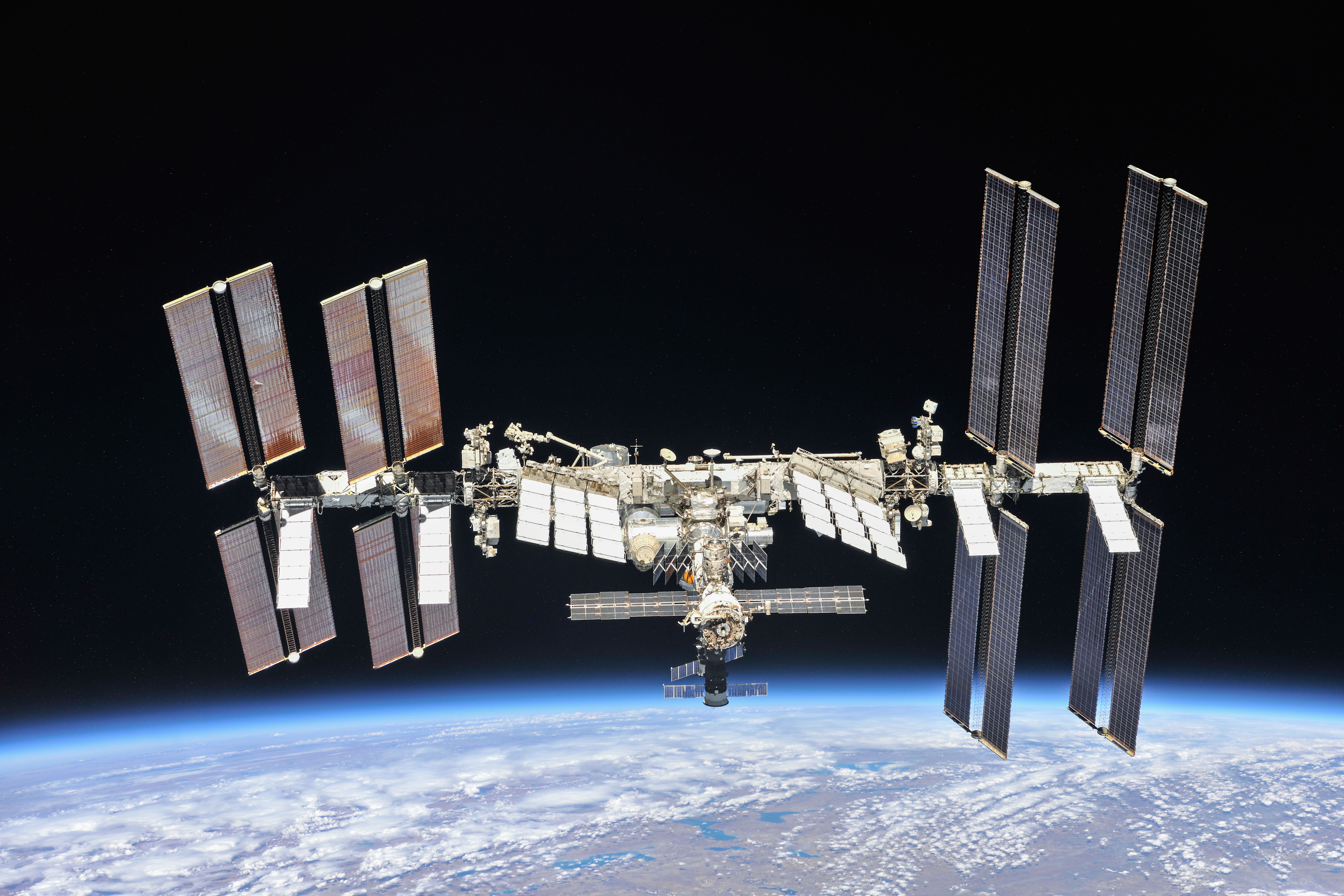
The SpaceX Dragon spacecraft Grace docked at the International Space Station on Thursday, Oct. 1, completing the fastest trip to the station by any U.S. vehicle in history.
The four-person Crew-13 arrived at the station's Harmony module at 7:05 p.m. EDT, just 7 hours and 55 minutes after launching from Cape Canaveral, Florida. NASA officials confirmed the record. The previous best for a U.S. spacecraft was 12 hours and 33 minutes, set by a SpaceX cargo capsule in November 2024, Space.com reported. The fastest crewed U.S. trip before Crew-13 was 14 hours and 43 minutes, set by the Crew-11 mission in August 2025.
For the Clear Lake area, the milestone carried a familiar hometown connection. Mission specialist Joshua Kutryk and pilot Luke Delaney trained at Johnson Space Center's Space Vehicle Mockup Facility and Neutral Buoyancy Laboratory before the flight, practicing spacesuit operations and Quest airlock procedures, according to NASA's mission overview. Dana Weigel, manager of NASA's Low Earth Orbit Program at JSC in Houston, outlined the crew's science agenda in the overview ahead of launch.
As we reported Oct. 1, Crew-13 lifted off at 11:10 a.m. EDT from Space Launch Complex 40 at Cape Canaveral Space Force Station. The crew includes NASA astronauts Jessica Watkins and Delaney, Canadian Space Agency astronaut Kutryk and Roscosmos cosmonaut Sergey Teteryatnikov.
Watkins, 38, became the first Black woman to command a spacecraft. It is her second spaceflight. Delaney, Kutryk and Teteryatnikov are each on their first trip to orbit.
The record-setting speed came down to orbital geometry. Julianna Scheiman, director of NASA science and Dragon programs at SpaceX, said at the post-launch press conference that the station happened to be in an ideal orbital position, and the physics worked out for the shortest launch-to-docking time to date. She called it close to the fastest the trip could be.
After leak checks and pressurization, the hatch opened at 9:19 p.m. EDT. Crew-13 floated aboard to join the seven members of Expedition 75, bringing the station's population to 11.
"We are super glad to be here with Expedition 75," Watkins said during the welcoming ceremony aboard the station. "This is truly a special place. I'm excited to be back, excited to be sharing this place with my Crew-13 crewmates for the first time."
The crew's six-month stay will focus on research managed through JSC. Weigel said the team will study human stem-cell-derived tissues to help treat heart disease and Parkinson's disease. They will also explore crop production for longer missions, study blood flow abnormalities in space and test new diagnostic medical equipment.
Kutryk, a fourth-generation Ukrainian Canadian, carried a family pocket watch more than 100 years old aboard Grace. His wife, Heather, is expected to give birth to their third child in late November while he is in orbit. NASA officials said they would work to keep Kutryk connected to events at home.
The mission had been delayed from mid-September after SpaceX discovered an oxidizer leak in the Dragon's propulsion system. Engineers cut the faulty valve from a propellant line and welded a replacement while the spacecraft was fully assembled and loaded with propellant, Ars Technica reported. It was the first time SpaceX had performed such a repair on a fully assembled Dragon.
Crew-13 will relieve the four astronauts of Crew-12, who have been aboard since February. That crew could return to Earth as early as Monday, Oct. 5.