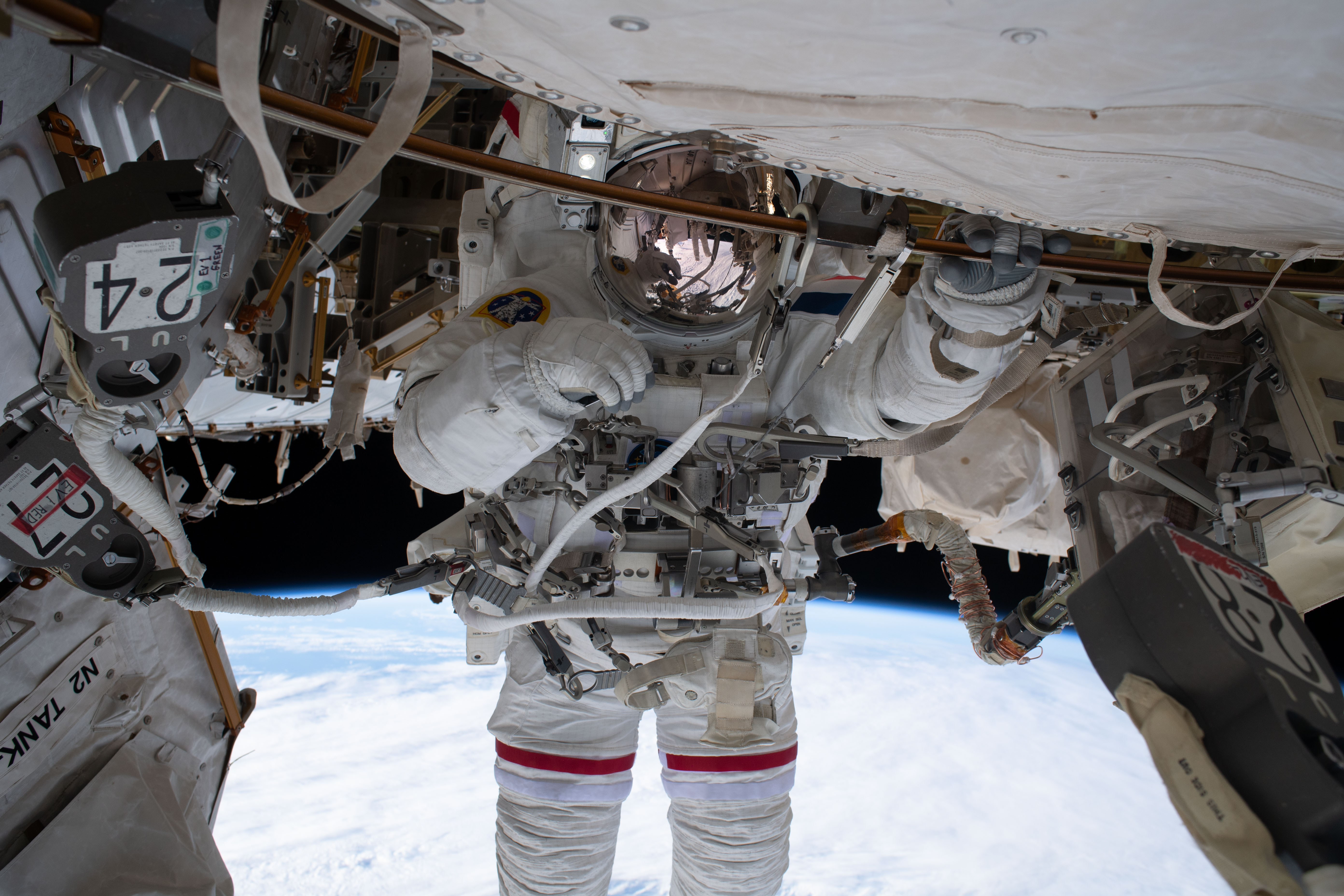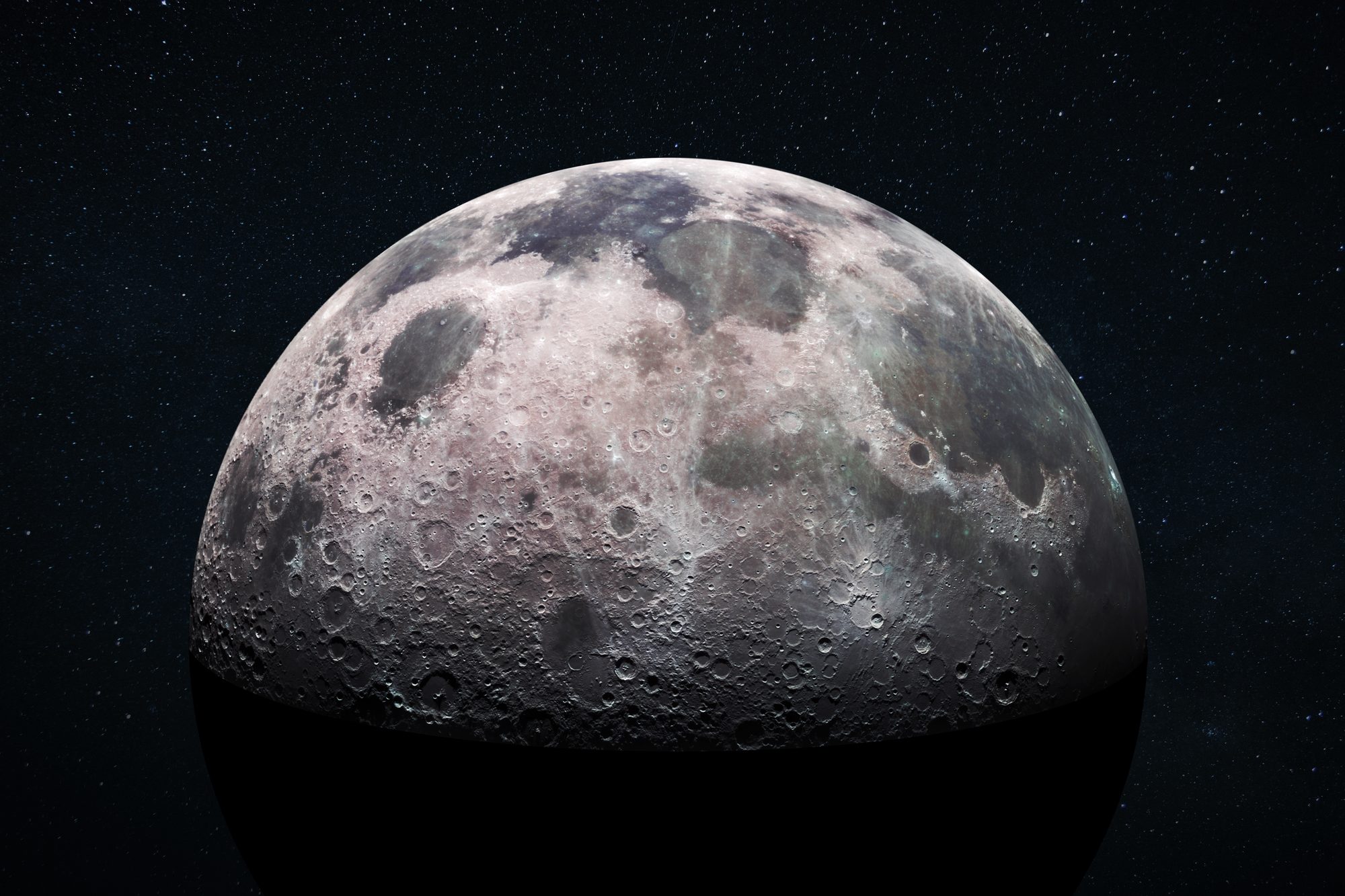
Microbes that travel with astronauts could survive in shaded pockets of the Moon's South Pole, a new NASA study co-authored by a Johnson Space Center scientist found, raising contamination concerns ahead of the Artemis IV mission planned for early 2028.
The peer-reviewed paper, published Wednesday, Aug. 19, in the journal Science Advances, is the first to evaluate whether human-associated bacteria and fungi can endure conditions at the lunar South Pole, where NASA plans to build a permanent base. Aaron Regberg, a geomicrobiologist in JSC's Astromaterials Research and Exploration Science Division, co-authored the research.
"I would have expected these microbes to have dried out," Regberg said in a NASA press release accompanying the study.
The team, led by Prabal Saxena of NASA's Goddard Space Flight Center, simulated conditions at three candidate exploration sites near the South Pole: Nobile Rim, Connecting Ridge and De Gerlache Rim. They tested five microorganisms previously found aboard the International Space Station, including the fungus Aspergillus niger and the bacterium Deinococcus radiodurans, one of the most radiation-resistant life forms known.
Using elevation and temperature data from NASA's Lunar Reconnaissance Orbiter, the researchers mapped where the Moon's terrain casts long shadows that shield the surface from lethal ultraviolet radiation. The Moon's small axial tilt, about 1.5 degrees, keeps the sun near the horizon at the poles, allowing even small bumps to create shaded zones.
Aspergillus niger proved the most resilient. During lunar winter, the fungus could potentially survive in 15 to 30 percent of mapped areas receiving some sunlight, and about 3 percent of the total terrain across all three sites could support its survival for at least seven days.
The concern is scientific, not biological.
The Moon lacks stable liquid water, so microbes cannot grow or reproduce there. But surviving organisms, or even dead biological material, could be mistaken for ancient lunar chemistry during future sample analysis, corrupting research results.
Human activity itself could worsen the problem. Boot prints, rover wheel tracks, drill holes and scoops may leave depressions shielded from sunlight, creating new survivable niches. Humans carry roughly 1 million bacteria on each patch of skin the size of a pencil eraser, and those microbes can vent from spacesuits and habitats.
NASA routinely bakes robotic spacecraft above 400 degrees Fahrenheit to kill organisms before launch. That sterilization method cannot be applied to crewed missions.
Andrew Needham, a Goddard-based co-author who serves as an Artemis contamination-control scientist for lunar samples, said in the press release that the findings matter beyond the Moon. He stressed that scientists need to document what exists on the lunar surface before human visits alter it, so that future Mars missions searching for signs of life can distinguish alien biology from hitchhikers brought from Earth.
The authors argue the survivable niches should not necessarily be avoided but could be targeted for carefully planned sample collection. They also suggest the Moon could serve as a natural laboratory to test microbial survival limits before human missions to Mars.
As Houston Public Media reported, Artemis IV would send astronauts to the South Pole for approximately one week. All Apollo missions landed near the equator, where terrain offered far less microbial shelter. The upcoming mission would mark the first time Americans have walked on the Moon in more than half a century.
Next steps for the research team include building higher-resolution terrain models and running experiments that combine multiple lunar stresses simultaneously.
Coming up in the Clear Lake area:
- Sept. 4 — Clear Lake Shores boat ramp reopens after an eight-month rebuild.
- Artemis III crew members continue training inside the Orion mockup at JSC; follow Space Center Houston for public viewing opportunities.