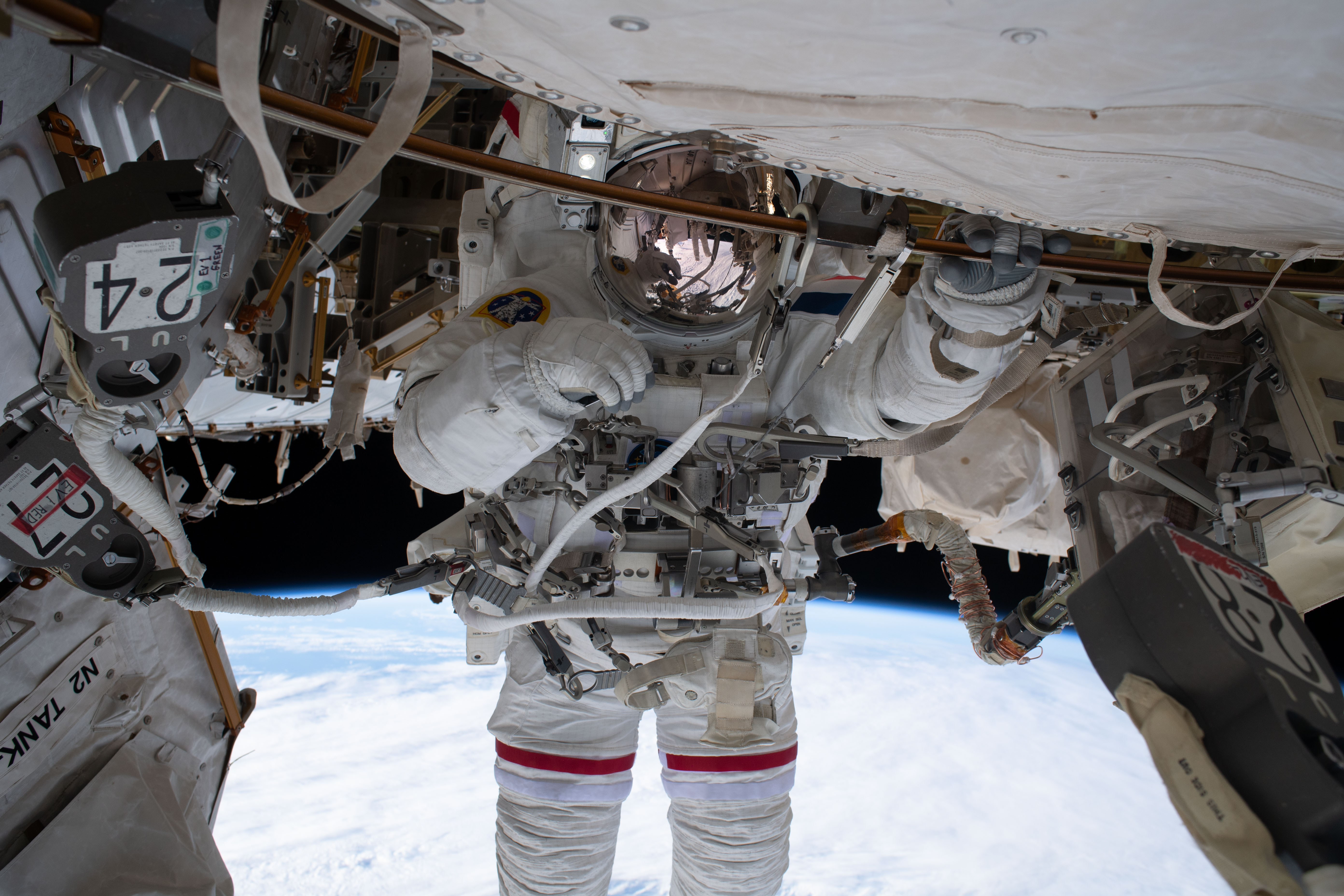
The people who photograph astronauts, rocket hardware and mission control celebrations for a living are finally in front of the camera themselves.
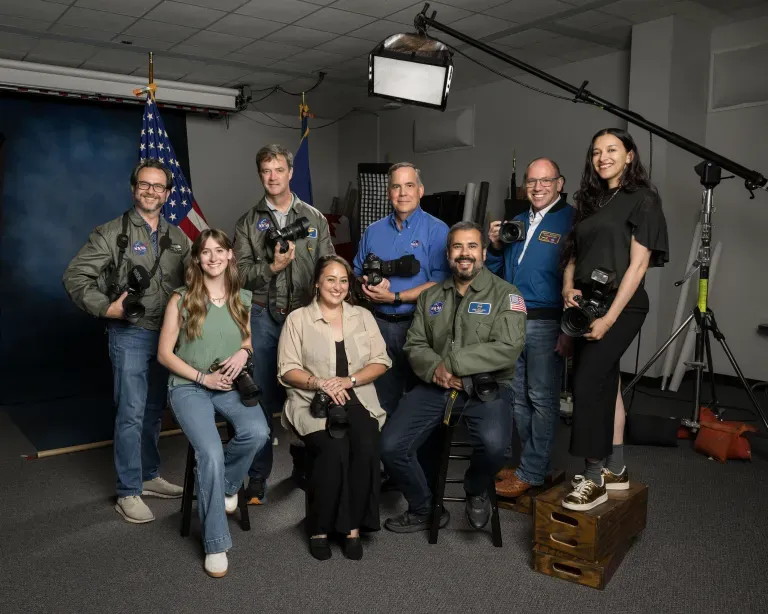
NASA's Johnson Space Center published a feature spotlighting its Imagery Acquisition Group on Wednesday, Aug. 19, to mark World Photography Day. The team works out of the 1,620-acre complex in the Clear Lake area, and several members have spent more than 30 years each documenting human spaceflight.
The group, led by supervisor Mark Sowa, operates eight camera systems and is certified to fly on parabolic flights, T-38 jets and helicopters. They also manage original Apollo mission films, preserved in a specially built cold storage vault at Johnson.
Three decades behind the lens
Robert Markowitz has photographed NASA's human spaceflight program for more than 30 years, spanning the space shuttle era, 25 years of continuous habitation aboard the International Space Station and the Artemis II mission.
One early career highlight: serving as the behind-the-scenes still photographer for nearly every KC-135 zero-gravity flight during the filming of "Apollo 13." He was 25 at the time.
"Looking back as a 25-year-old photographer at Johnson, I don't think I fully appreciated how unique an opportunity it was to be there documenting those moments," Markowitz said in the NASA feature.
David DeHoyos, a Houston native who grew up during the Apollo era, joined Johnson's photo lab in 1991. He keeps NASA pins and stickers in his camera bag to hand out to children he meets on assignments.
Paths to Johnson
The team's routes to the space center vary widely. James Blair started in newspaper photojournalism, working at publications across the country and in Ecuador before landing assignments that now range from astronaut training to geology field work in Iceland. Helen Arase Vargas came from photojournalism in Southern California and Boeing's scientific photography team in El Segundo. Luna Posadas Nava's background spans emerging technology and optics; she joined Johnson shortly before the Artemis II launch and documented the Science Evaluation Room during the mission's lunar flyby.
Bill Stafford found his way in during his senior year of college, when a friend completing a photography internship at the center told him about an opening.
Beyond the daily shoot
According to a separate NASA feature on the team's collaborative work, the group captures everything from high-speed digital motion pictures to spherical 360-degree panoramas. Sowa, who brings more than three decades of scientific photography experience to his role, oversees both the shooting and the long-term preservation of Apollo-era film in digital and physical formats.
A group photo taken Aug. 10 shows the team together at Johnson, including former NASA photographer Josh Valcarcel.
The original Apollo films sit in that cold storage vault, waiting for the next generation of eyes. Space Center Houston, the visitor center adjacent to JSC, is open year-round for residents who want to see where the images are made.