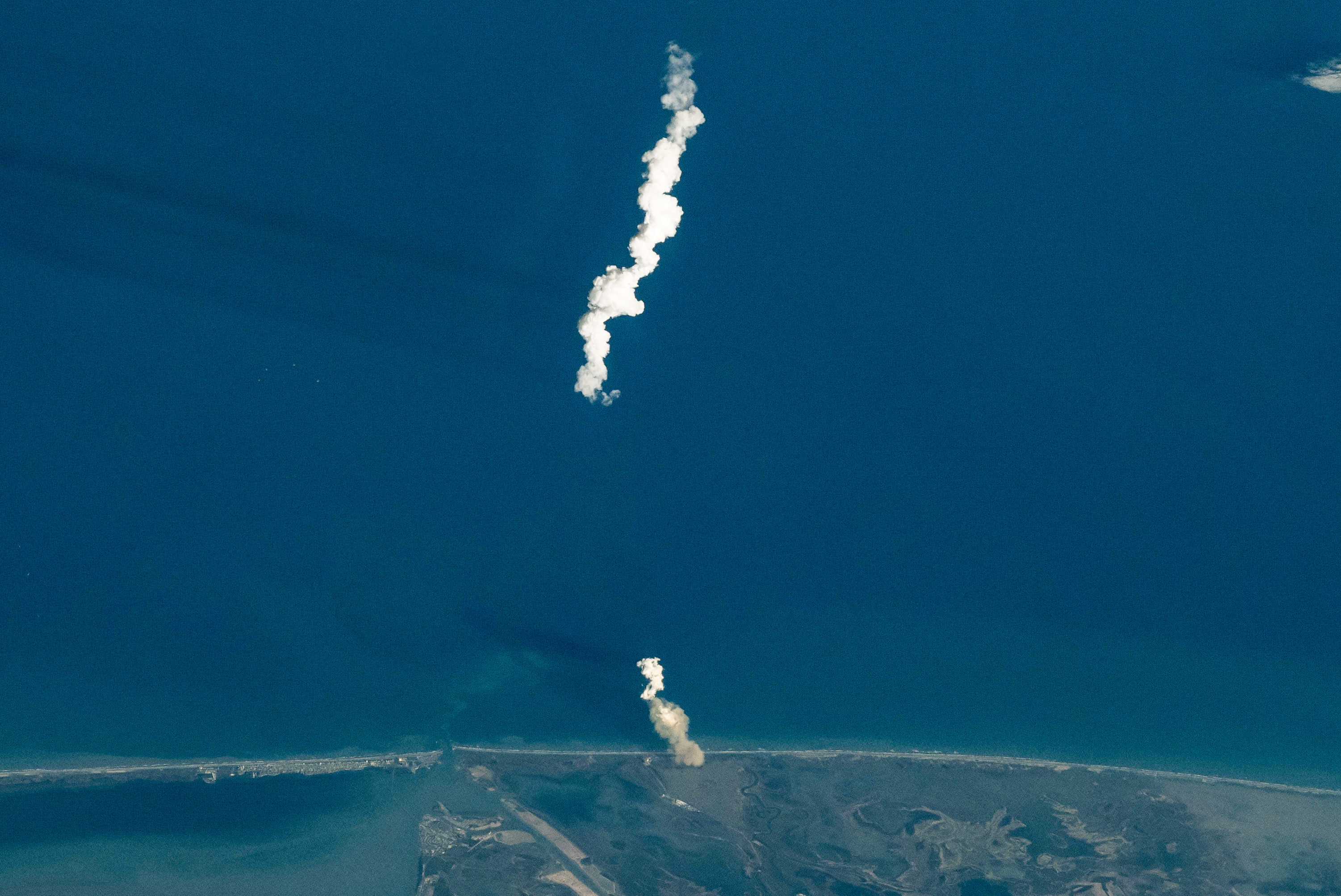
SpaceX's Starship rocket will attempt to reach orbit for the first time on Monday, Sept. 28. The flight is a direct milestone for NASA's Artemis lunar program, whose astronauts train at Johnson Space Center.
The 75-minute launch window opens at 7:15 a.m. CT at SpaceX's Starbase facility in Boca Chica, Texas, according to the company. The launch needs FAA approval.
Flight 14 will be the first Starship mission to go beyond a suborbital arc. The upper stage is expected to circle Earth about six times at roughly 171 miles altitude over nearly 10 hours, then splash down in the Pacific Ocean west of Chile. The Super Heavy booster will splash down in the Gulf of Mexico about seven minutes after liftoff. Neither stage will attempt a tower catch.
Previous Starship flights traveled about halfway around the world before splashing down in the Indian Ocean. Don Platt, director of the Spaceport Education Center at Florida Tech, said the return from a full orbit will put far more stress on the heat shield.
"That's going to put a great deal more stress on the heat shield and the tile system they've been working on for Starship," Platt told ABC13.
Three of the 26 Starlink V3 satellites aboard will carry cameras to photograph the heat shield after deployment. Two heat shield tiles recovered from the Flight 13 upper stage in July are being reflown on Flight 14, marking the first tile reuse in Starship's history.
Why Clear Lake is watching
NASA holds a $2.89 billion contract with SpaceX to develop a Starship variant as the Human Landing System for the Artemis lunar program. That contract was later expanded to cover Artemis IV. Reaching orbit is the first prerequisite in a chain of demonstrations the vehicle must complete before it can carry astronauts to the moon.
Under the current NASA plan, Starship is set to fly an Earth orbit demonstration on Artemis III in late 2027, with a crewed lunar landing on Artemis IV targeting 2028. The Artemis architecture requires Starship to be refueled in low Earth orbit before departing for the moon, a process estimated to need 10 to 16 tanker flights.
The Artemis III crew has been training at Johnson Space Center, including water survival exercises at the Neutral Buoyancy Laboratory and simulations in an Orion capsule mock-up, according to a Starlust report on Artemis III training. Commander Randy Bresnik, European Space Agency Pilot Luca Parmitano, and Mission Specialists Andre Douglas and Frank Rubio will rendezvous with landing system pathfinders launched by both SpaceX and Blue Origin.
Starlink payload and revenue
The 26 Starlink V3 satellites will be the first operational V3 units placed into the constellation. Each satellite adds 1 terabit per second of capacity. SpaceX said the satellites should begin serving customers within weeks of launch. TechCrunch reported that a successful deployment would make Flight 14 the first Starship launch to generate revenue for SpaceX's launch division.
SpaceX originally targeted Sept. 22 for the flight but pushed the date to Sept. 28 on Thursday, Sept. 17 without explanation, Space.com reported.
How to watch
SpaceX plans to livestream Flight 14 on its website and on X (@SpaceX) starting about 30 minutes before liftoff. Coverage is planned through splashdown, roughly 10 hours after launch.