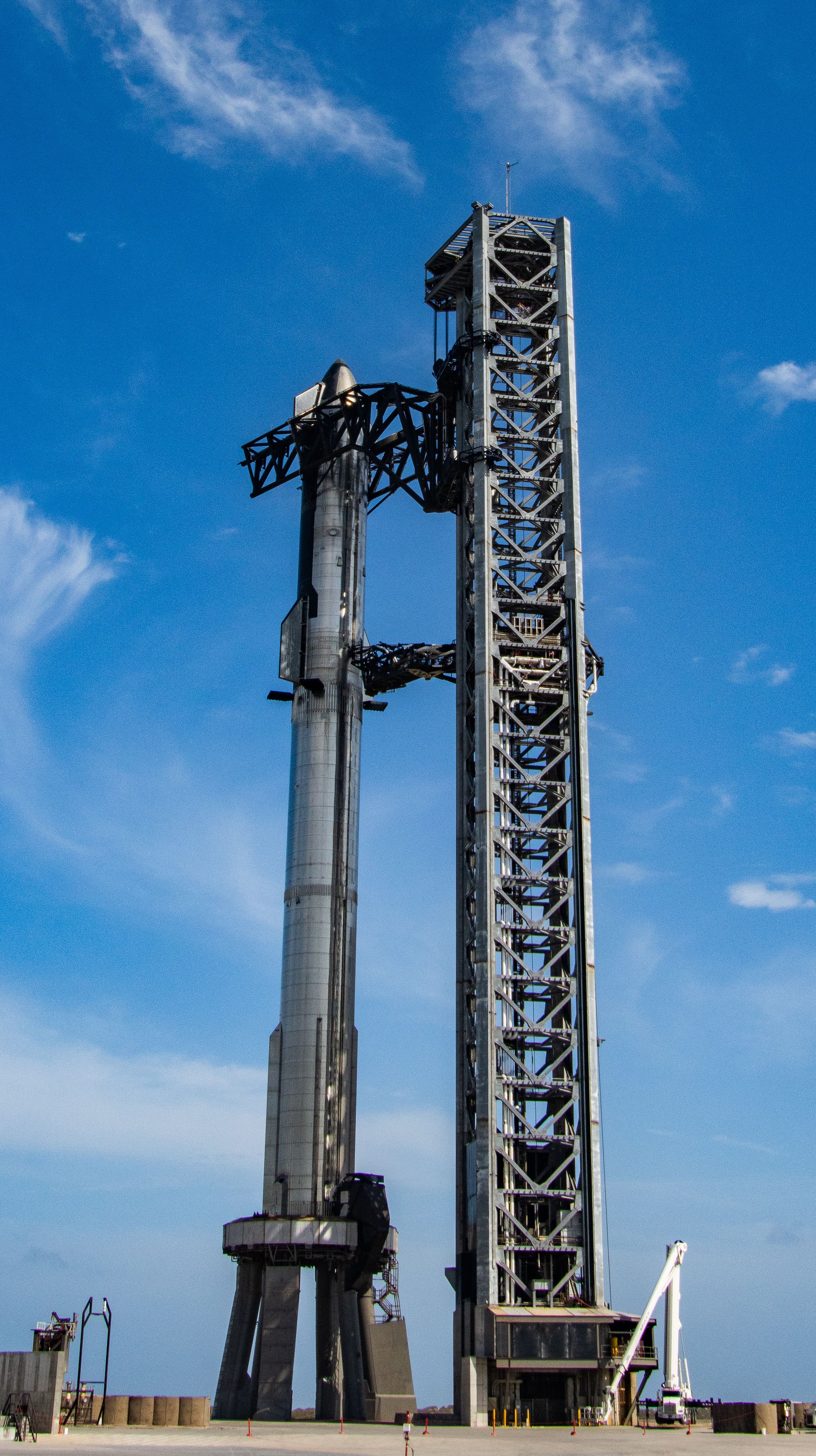
SpaceX launched its Starship rocket into orbit for the first time Monday, Sept. 28, lifting off from Starbase near Brownsville around 7:48 a.m. CT after a roughly 33-minute delay from the original window, as Teslarati reported.
The 10-hour mission is still underway. A successful flight would mark a step forward for NASA's Artemis lunar program, managed at Johnson Space Center.
What's at stake for JSC
The Human Landing System (HLS) Program Office at Johnson Space Center manages NASA's contracts with SpaceX and Blue Origin to build lunar landers. A March 2026 NASA Office of Inspector General report found NASA has obligated $6.9 billion for HLS development since 2019 and estimates spending $18.3 billion through fiscal year 2030.
That report also found SpaceX's lander will not be ready for a June 2027 lunar landing. NASA restructured the Artemis III mission to test one or both landers in low Earth orbit instead, now targeting mid-2027. The Artemis III crew, announced at Johnson Space Center on June 9, includes commander Randy Bresnik, pilot Luca Parmitano and mission specialists Frank Rubio and Andre Douglas.
Artemis IV, targeting early 2028, is now expected to be the first crewed lunar landing. NASA has said it will choose whichever lander is most capable and certified in time.
A key prerequisite remains unfinished. SpaceX's propellant transfer demonstration, originally planned for March 2025, has slipped twice and still has no confirmed launch date.
Artemis program manager Jeremy Parsons called the restructured Artemis III "one of the most complex and ambitious missions NASA has ever undertaken" in a NASA statement on the mission architecture.
Flight 14 profile
All 13 previous Starship flights were suborbital. Flight 14 is the program's first orbital attempt and first revenue-generating mission.
The FAA issued the launch license late Sunday, Sept. 27. SpaceX had confirmed on X on Sept. 24 that its launch rehearsal was complete.
The fully assembled vehicle stood 407 feet tall. About two and a half minutes after liftoff, Ship 41 separated from Super Heavy Booster 21. The booster targeted a controlled splashdown in the Gulf of Mexico. Neither stage was set for recovery by the launch tower.
Ship 41 was expected to fire its engines to reach orbit about 30 minutes after liftoff, climbing to roughly 170 miles above Earth. Over 10 hours and six orbits, the spacecraft is set to deploy 26 Starlink V3 satellites. Three of those satellites carry cameras to photograph the heat shield for tile damage before reentry.
About nine hours in, Ship 41 is scheduled to begin its return, splashing down in the Pacific Ocean off Chile.
SpaceX said it addressed problems from the July flight, when ice clogged three center engines on the booster. Booster 21 carries improved engine filtering and new relight software. Ship 41 flies with extra tile fasteners and curved tiles to reduce heating. Two tiles recovered from the previous ship are flying again, marking the first reuse of any Starship heat-shield component.
The mission outcome, including orbital insertion and satellite deployment, had not been confirmed as of Monday afternoon. SpaceX is streaming the flight on its X account and at spacex.com.